
09Sep
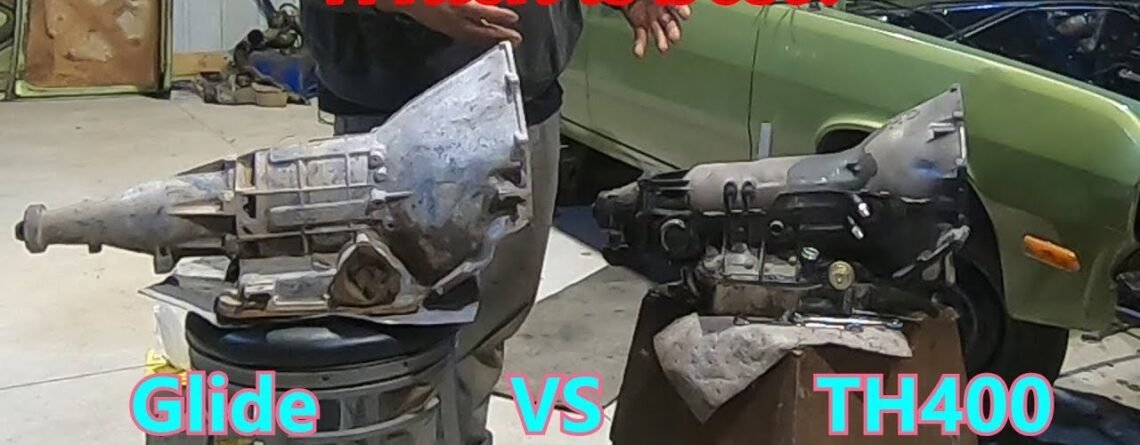
Powerglide vs TH400: The Definitive Drag Racing Transmission Guide
Powerglide vs TH400: The Definitive Drag Racing Transmission Guide

Few arguments in drag racing have burned longer than Powerglide versus TH400. It’s the eternal bracket-racer question: the two-speed against the three-speed, the lightweight against the torque monster, the 1960s taxi-cab transmission against… the other 1960s taxi-cab transmission. Both platforms have more wins behind them than every modern overdrive combined, and both remain the default choices for everything from Super Stock to Pro Modified.
So which one belongs in your car? The honest answer depends on horsepower, weight, class rules, and how you actually race. This guide breaks down the real differences — no folklore, just engineering.
The Two Contenders at a Glance
Table
| Specification | Powerglide (GM Turbo Glide, 1962–1973 origin) | TH400 (Turbo Hydra-Matic, 1964–1990 origin) |
|---|---|---|
| Forward gears | 2 | 3 |
| Typical drag 1st gear | 1.76:1 or 1.82:1 | 2.48:1 |
| 2nd gear | 1.00:1 direct | 1.48:1 |
| 3rd gear | — | 1.00:1 direct |
| Stock case material | Aluminum | Cast iron or aluminum |
| Approx. race weight (built) | 45–55 kg lighter | Heavier |
| Strength reputation | Excellent to ~1,500 HP in race builds | Legendary; 2,000+ HP capable |
| Street friendliness | Poor without overdrive | Tolerable with tall gearing |
| Parts & knowledge base | Enormous | Enormous |
Power & Torque Capacity: Does the TH400 Really Win?
Conventional wisdom says the TH400 is stronger. Conventional wisdom is mostly right — the TH400’s planetary gearsets, wider bands, and massive direct clutch drum were designed to survive behind Cadillac torque in a 2,500 kg luxury car. In race trim with billet internals and an SFI case, TH400s routinely hold 1,500–2,000+ HP in doorslammer and outlaw classes.
But the Powerglide’s reputation for fragility belongs to stock units behind modern power. A properly built Powerglide — Vasco gearset, 10-clutch drum, billet valve body, SFI SuperCase — is rated by builders like ATI to well over 1,000 HP, and top configurations exceed 3,000 HP in professional classes. The Powerglide doesn’t survive by being stronger; it survives by being simpler. Fewer clutches, fewer shafts, fewer places to break.
The rule of thumb most builders quote: above roughly 1,200–1,500 HP, the TH400’s extra capacity starts to matter; below that, a built Powerglide holds just fine.
Weight & Rotating Mass: The Glide’s Trump Card
This is where the Powerglide earns its keep. A race-built Powerglide with an SFI case carries significantly less weight and, more importantly, less rotating inertia than a TH400. Less spinning mass means:
-
Quicker converter acceleration off the line
-
Less parasitic horsepower loss through the driveline
-
Faster engine RPM recovery between gears
On a lightweight car (under ~1,400 kg) in a heads-up or index class, those fractions matter. The TH400’s iron case alone can cost you double-digit kilos hanging off the back of the car — weight your rear tires have to plant on launch.
Gearing & Acceleration: The Math That Decides Races
Here’s the counterintuitive truth: the Powerglide’s “missing” second gear is often an advantage at the drag strip.
With a TH400, first gear is 2.48:1 — deep and aggressive. Great for launching a heavy car. But the 1–2 shift drops to 1.48:1, then the 2–3 shift to 1.00:1. Each shift is a moment where the engine unloads, converter slips, and elapsed time leaks away.
The Powerglide makes exactly one shift: from 1.76 (or 1.82) straight to 1.00 direct. In a car whose converter and rear gear are chosen correctly, that single shift is nearly lossless, and the two-speed actually conserves momentum better down track. Bracket racers love the consistency: one shift, one variable eliminated, identical passes all day.
The TH400 fights back on heavy cars and tight classes: that 2.48 first gear multiplies torque for launches that a Powerglide simply can’t replicate with the same converter stall, and the intermediate 1.48 gear keeps the engine in its powerband on index racing where mph matters.
The Transbrake Question
Both platforms accept transbrakes — the solenoid-activated valve body that loads the converter against a locked first/reverse engagement for the perfect launch. In the Powerglide, transbrake technology is arguably more mature and more tunable (reverse-pattern, dual-pattern, and transbrake-specific valve bodies from every major builder). In the TH400, transbrakes exist and work well but add complexity to an already complex valve body.
If your class demands the sharpest, most repeatable reaction times and you run a tight converter, the Powerglide with a quality transbrake valve body is the proven tool — like the ATI Superglide 4 in our catalog.
Street/Strip Reality
If the car sees real road miles, the calculus changes. A Powerglide with a 4,500+ RPM stall converter on the highway is a heat generator with no lockup option in most race builds. The TH400’s third gear plus a moderate stall makes cruising survivable — and if you can spec a lock-up converter (as in our ATI 201454LU TH400), highway driving becomes genuinely civilized. For drive-to-the-track builds, the TH400 wins on manners; for trailer-only race cars, the Glide wins on everything else.
Real-World Builds: What We’d Recommend
Choose the Powerglide if: your car is under ~1,400 kg, you run a transbrake and stall converter, you’re bracket or heads-up racing, and ET consistency is the goal. In that envelope, it’s lighter, simpler, and faster. Our pick: the ATI Superglide 4 Powerglide 401555SC — transbrake, SFI SuperCase, Chevy bell, rated 1,200 HP in the reverse-manual configuration.
Choose the TH400 if: your car is heavy, your engine makes violent low-RPM torque, you need the 2.48 first gear for load, or you drive to the track. Our pick: the ATI TH400 201454LU — lock-up converter, street/strip calibration, dyno-tested.
Either way, converter selection matters more than the box: tell us your engine’s torque curve, vehicle weight, and rear gear, and we’ll spec the stall and first-gear ratio before you order. Browse the full Transmission & Drivetrain range — or call +31 970 050 30680 and we’ll build the combination with you.
FAQ
Is a Powerglide faster than a TH400?
In lightweight drag-only cars with a matched converter and rear gear, yes — the Powerglide’s single shift and lower rotating weight typically win on ET. In heavy cars or where the 2.48 first gear is needed for launch, the TH400 is faster.
How much horsepower can a stock TH400 handle?
A healthy stock TH400 tolerates roughly 450–500 HP in a street car with good maintenance. Beyond that, a performance build with upgraded clutches, bands, and valve body is strongly advised.
What RPM stall converter should I run with a Powerglide?
Match stall to your engine’s torque peak — typically 500–700 RPM below peak torque for bracket racing. A cam that peaks at 5,500 RPM wants roughly a 4,800–5,000 stall converter.
Can a Powerglide be driven on the street?
It’s possible with a moderate stall and tall rear gears, but it’s compromised: no overdrive, heat build-up at cruise, and poor fuel economy. For regular street use, the TH400 (especially with a lock-up converter) is the better choice.
Is a TH400 stronger than a 4L80E?
In race builds, a billet TH400 is comparable to or stronger than a 4L80E, with far less rotating weight. The 4L80E wins only when overdrive is mandatory.


LEAVE A COMMENT